MikroTik PPPoE billing
MikroTik PPPoE billing with cloud RADIUS
How billing and RADIUS work together on MikroTik — authentication, speed plans with FUP, CoA disconnect and self-collecting online recharge — and how to move off local secrets or old tools.
If you run subscribers on MikroTik, billing and RADIUS belong together: the same system that takes a recharge should decide whether a PPPoE session connects, at what speed, and when it disconnects. This guide covers how MikroTik PPPoE billing with cloud RADIUS works and how to move off local scripts or spreadsheets.
How MikroTik PPPoE billing with RADIUS works
- Your MikroTik router points AAA at a RADIUS server instead of a local PPP secret.
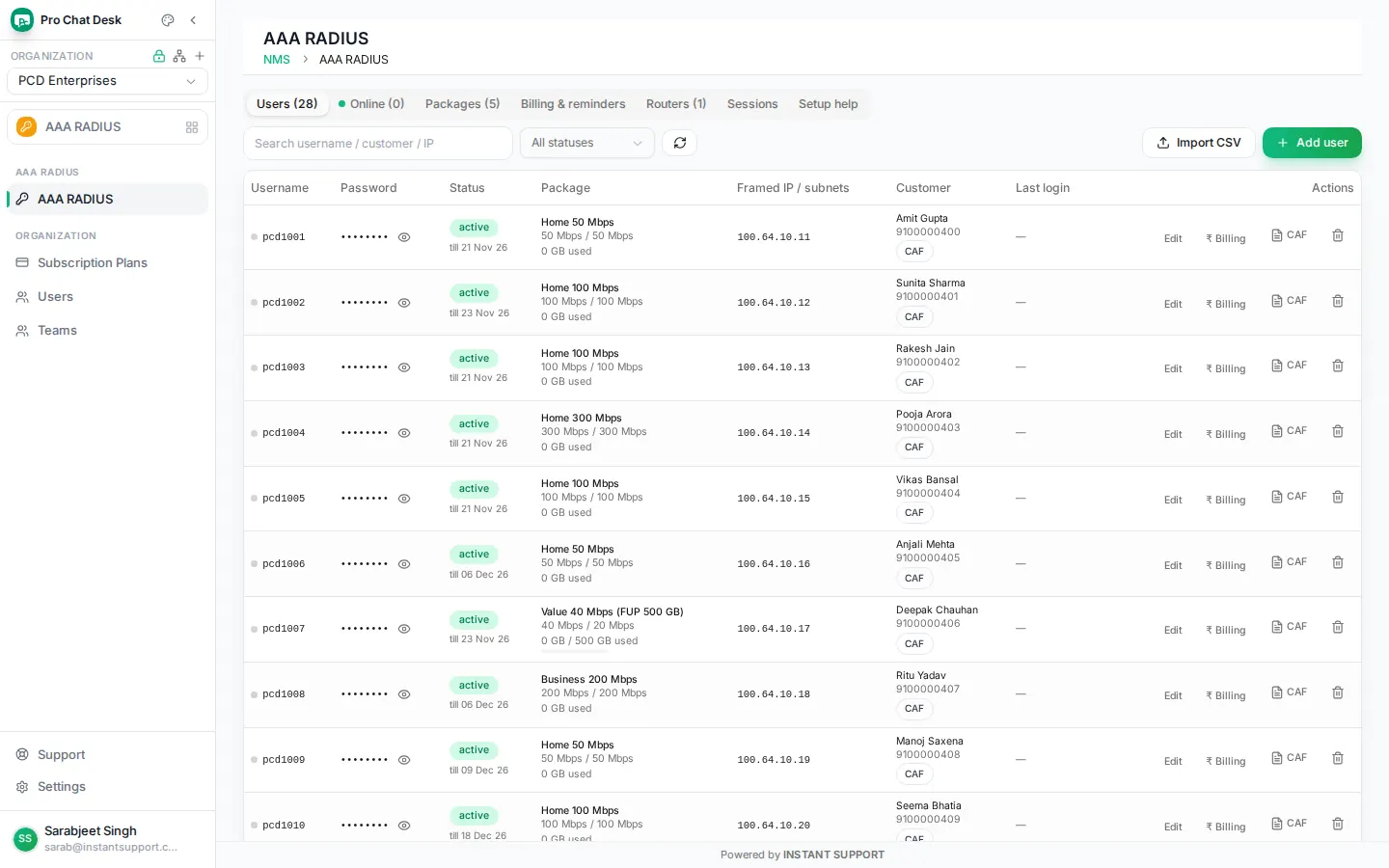
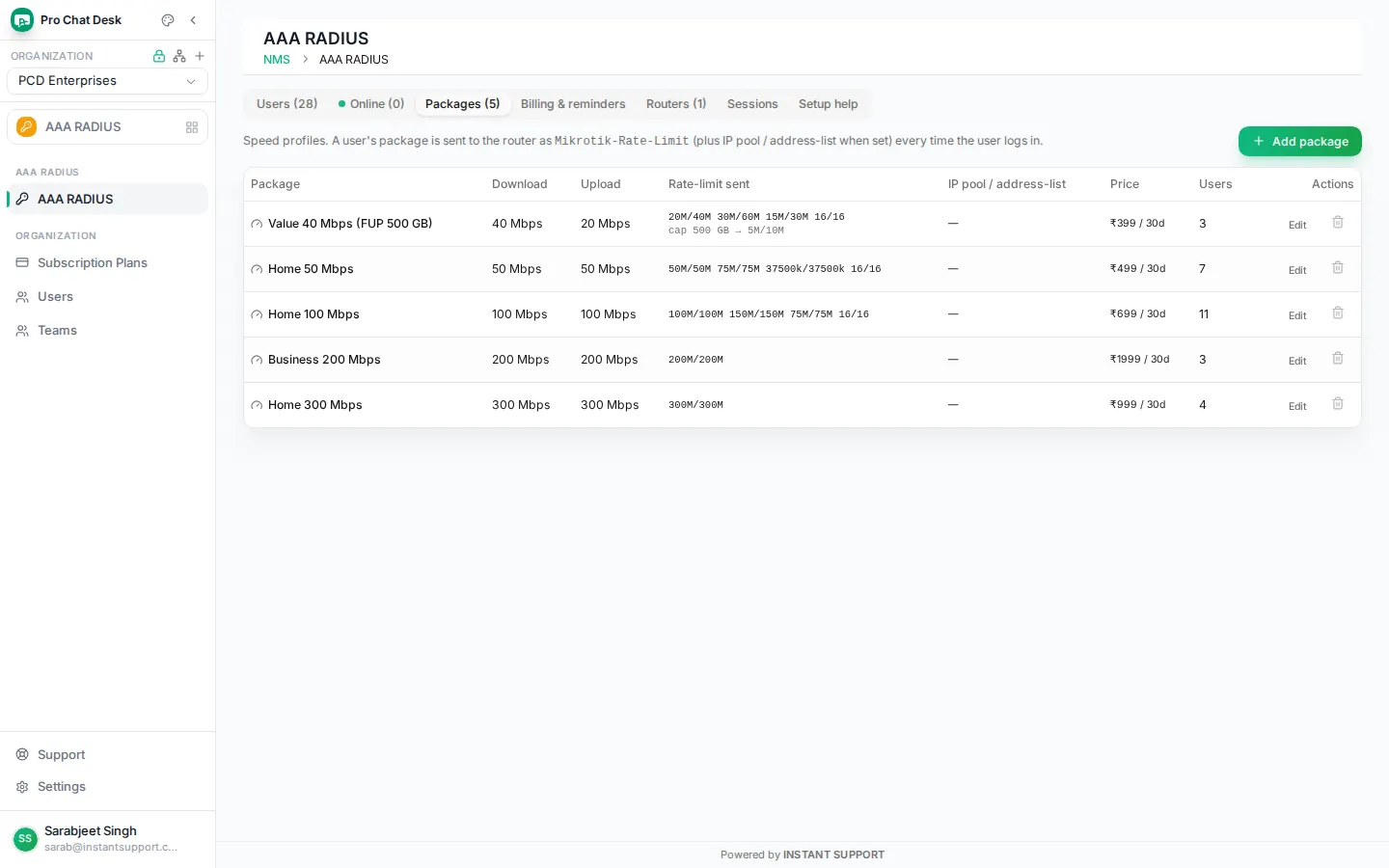
- On connect, RADIUS authenticates the subscriber (PAP, CHAP or MS-CHAPv2) and returns the plan — speed becomes Mikrotik-Rate-Limit with burst, plus static IP, routed subnet or MAC lock as set.
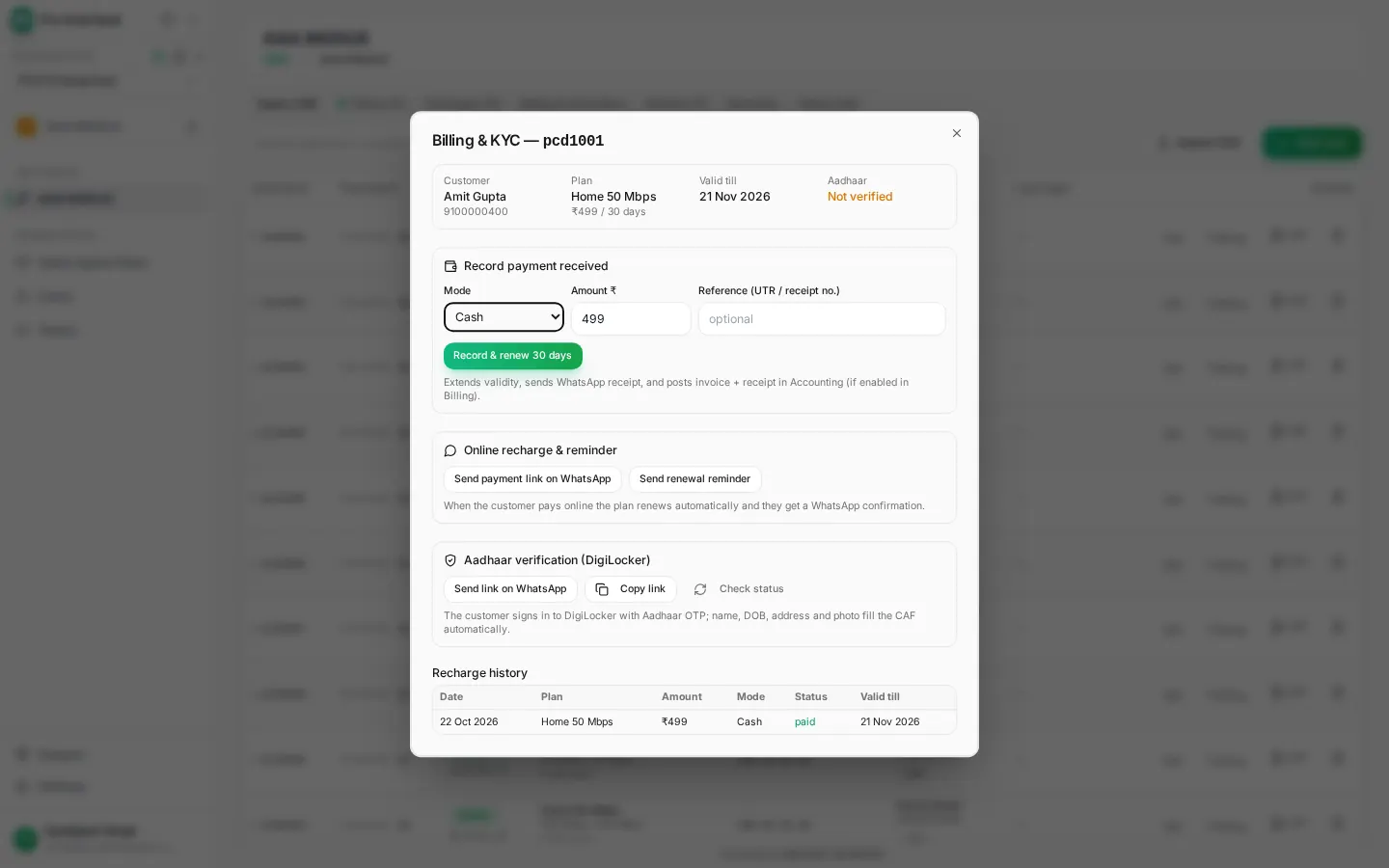
- When the plan expires or payment is due, the session is cut; an online recharge restores it. Live disconnect uses CoA, so a changed plan takes effect without waiting for reconnect.
- Accounting records sessions for usage, FUP and the NAT/IPDR log the law expects you to keep.
Moving from local secrets or old tools
Operators usually start with PPP secrets on the router, a spreadsheet, or a legacy tool like Radius Manager, and chase renewals by phone. The pain is always the same: payments and sessions are separate, so staff manually enable and disable users. Cloud RADIUS closes that gap — the recharge itself re-enables the session. Migration is a day's work: point the router's RADIUS at the cloud, import subscribers and plans, and test on a few users first.
Pro Chat Desk cloud RADIUS for MikroTik
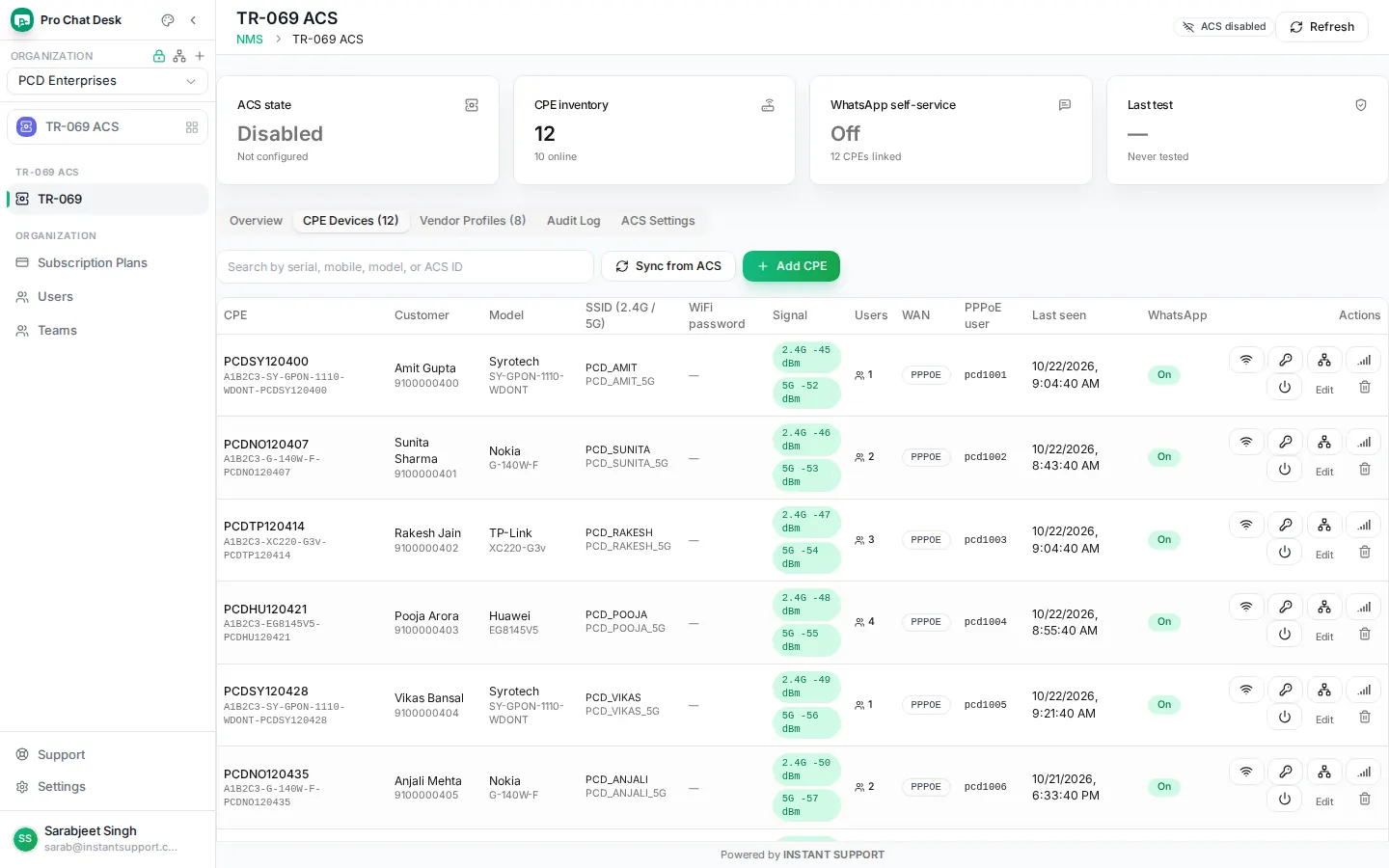
Pro Chat Desk provides cloud RADIUS built for MikroTik: PPPoE and hotspot logins, speed packages with FUP and burst, static IPs and routed subnets, MAC lock, simultaneous-use limits and live CoA disconnect. Subscribers renew through WhatsApp reminders and a UPI/Razorpay link into your own account, which posts a GST invoice automatically. It sits alongside TR-069 for ONT control, the IPDR/NAT log server, and NMS in one login. AAA RADIUS is ₹999 per month (plus GST) with a 30-day free trial, no card.
More detail on the ISP billing & RADIUS page, or compare options in the India buyer guide.
See it in the product
Live screens from the Pro Chat Desk portal with a demo company.
Questions ISPs ask
Short, straight answers.
How does MikroTik billing software use RADIUS?
The MikroTik router sends PPPoE/hotspot logins to a RADIUS server, which authenticates the user and returns the plan as Mikrotik-Rate-Limit with FUP, static IP and MAC lock. Expiry or non-payment cuts the session; an online recharge restores it, with live changes pushed by CoA.
Which MikroTik connection types are supported?
PPPoE, hotspot, L2TP, SSTP and OpenVPN on MikroTik RouterOS, with PAP, CHAP and MS-CHAPv2 authentication.
Can I migrate from Radius Manager or PPP secrets?
Yes. You point the router's RADIUS at the cloud, import subscribers and plans, and test on a few users before switching everyone over — usually about a day, with free migration help.
How much does MikroTik RADIUS billing cost?
AAA RADIUS is ₹999 per month plus GST on a paid plan, with a 30-day free trial and no card. TR-069 and the Log Server are ₹999 per month each if you need them.